
Harness School
Inside the Clydesdale’s six-point movement system
A closer look at the articulated layout that helps a dual-camera harness move with the photographer.
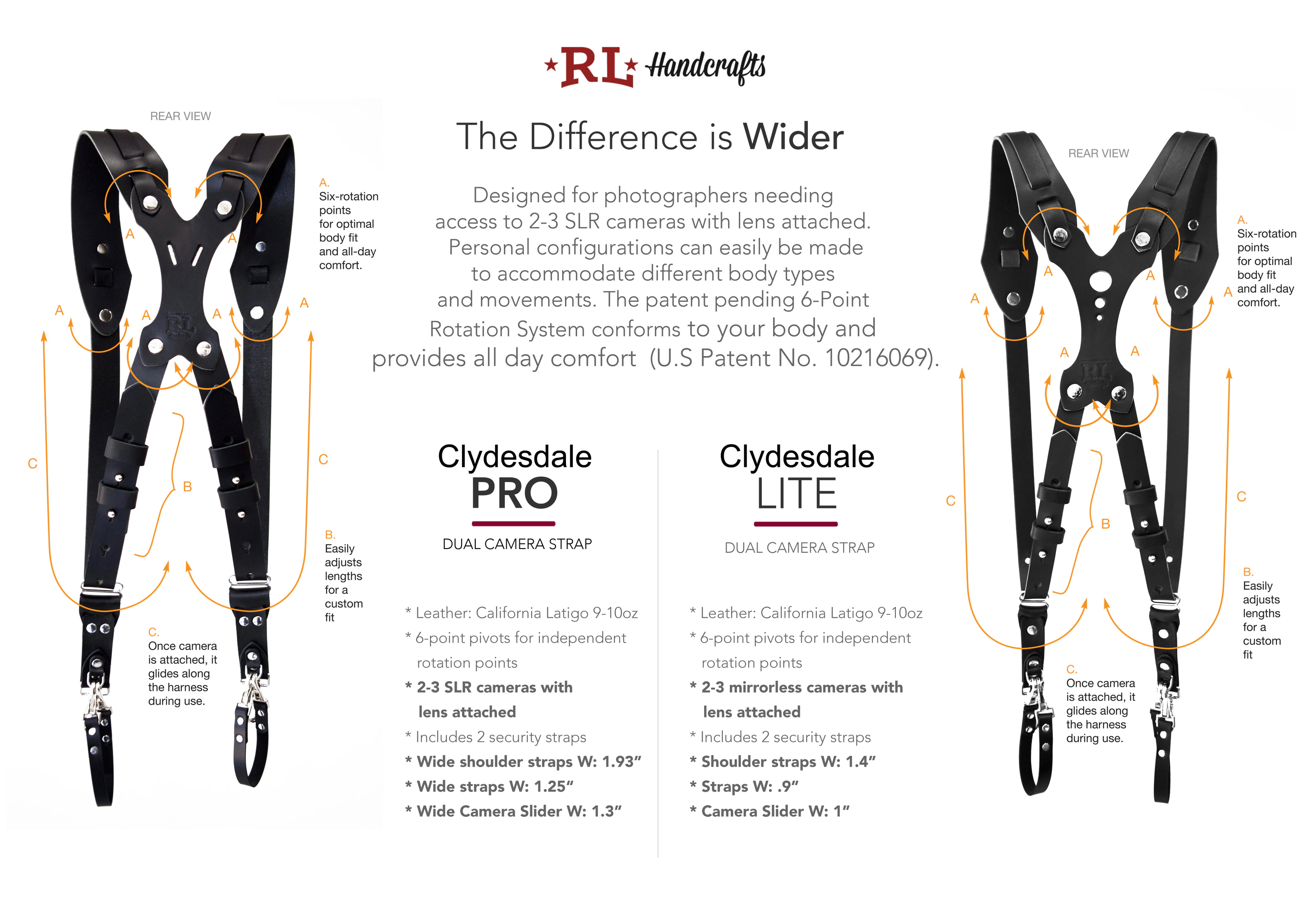
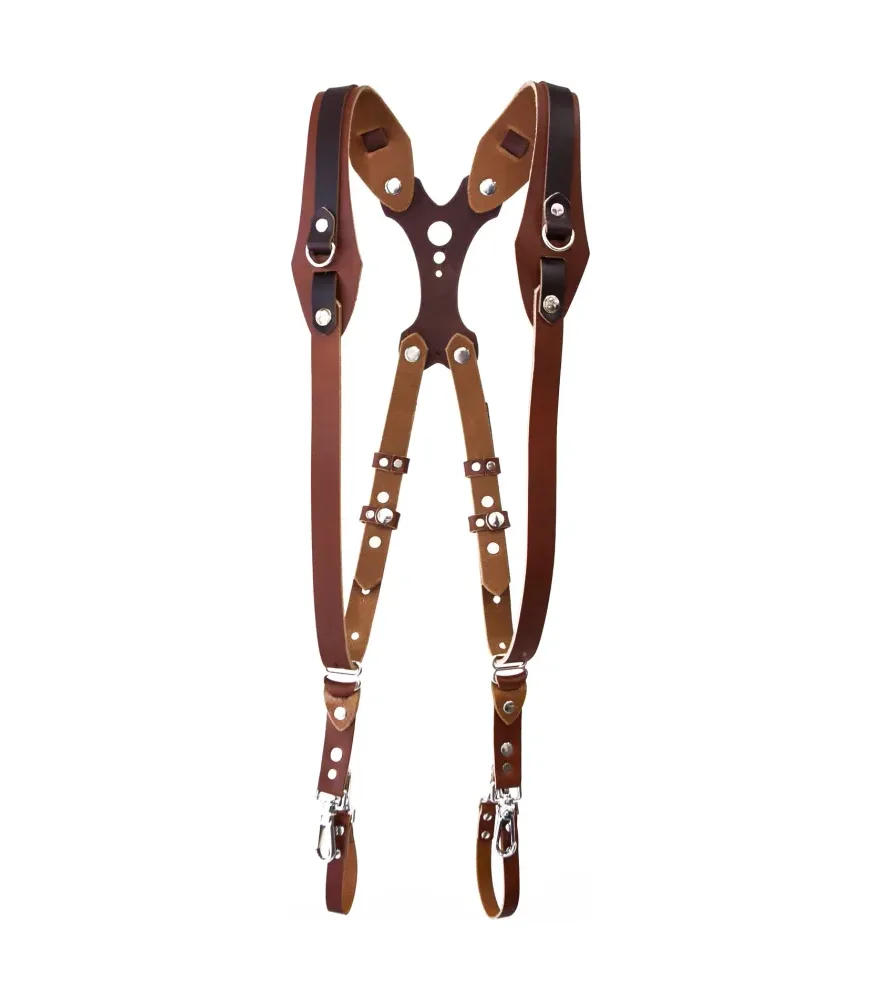
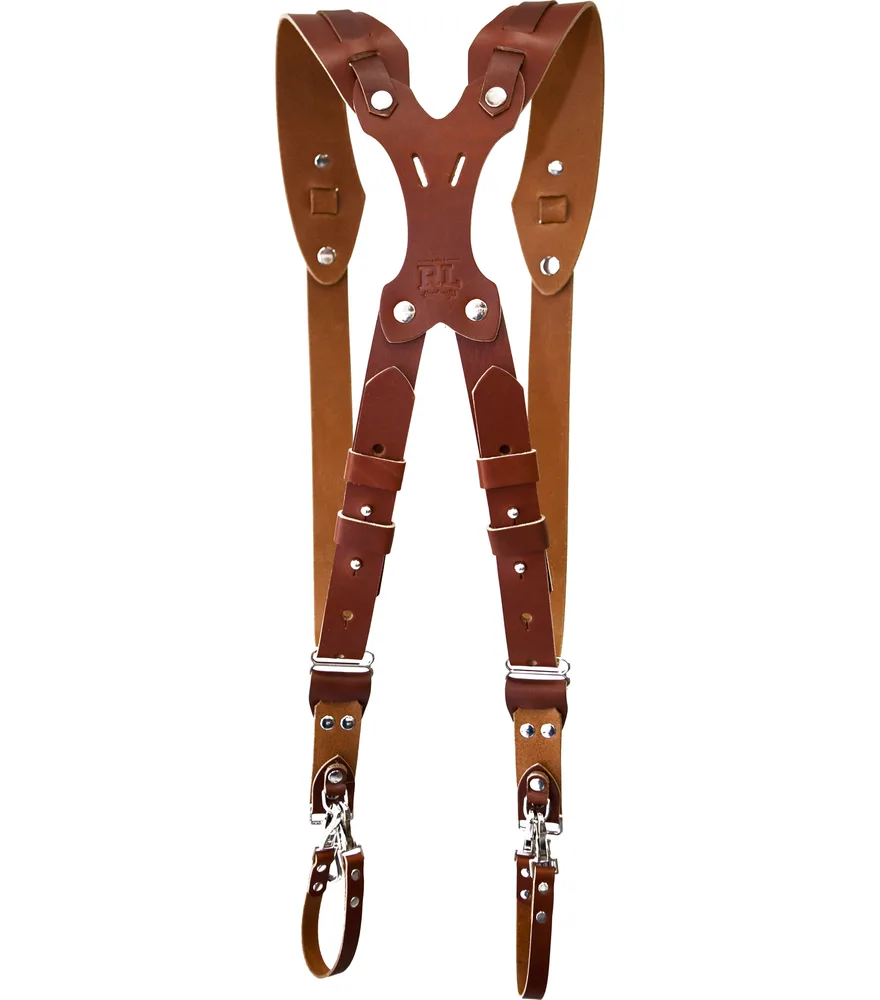
The Clydesdale is built as a system of connected leather sections rather than one rigid shape. Six principal movement points allow the harness to articulate across the shoulders and back while the camera sliders travel independently at the sides.
Why articulation matters
Photographers rarely stand square to the subject. They reach, crouch, turn, and move through crowds. Articulation helps the harness follow those changes instead of asking the body to fight a fixed frame.
- Shoulder pivots help the upper sections follow changes in posture.
- The central back layout shares movement across both sides of the harness.
- Independent camera sliders keep each camera available along its own path.
- Security connections provide a secondary point between the camera and carry system.
Lite, Pro, and Pro-DLX
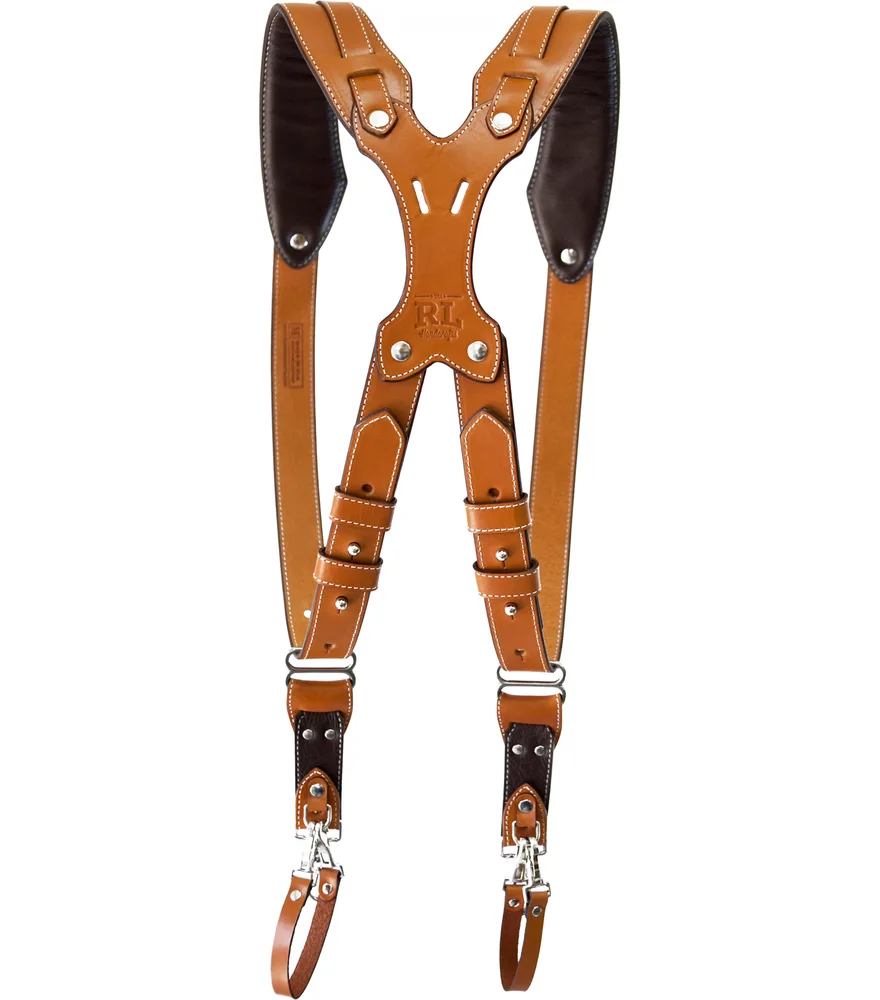
The Clydesdale family keeps the same dual-camera idea while changing the level of structure and included capability. Lite is the simpler entry, Pro is the core professional configuration, and Pro-DLX is the expanded flagship package.
This Journal story draws on Republic Leather’s product archive and working-photographer experience. Explore the supporting pages: